THE INVETERATE CRIMINALITY OF THE UNITED NATIONS ORGANIZATION IN THE GREAT LAKES REGION OF AFRICA
The inveterate criminality of the United Nations organization in the great lakes region of Africa has not given the slightest sign of abating to date…
THE INVETERATE CRIMINALITY OF THE UNITED NATIONS ORGANIZATION IN THE GREAT LAKES REGION OF AFRICA
EN MARGE DE SA TOURNÉE OFFICIELLE AU MOZAMBIQUE, LE PRÉSIDENT PAUL KAGAME HARANGUE SES SOLDATS FAISANT LA GUERRE AU TERRORISME DANS LE MOZAMBIQUE
Ntarugera Deo Koya
Consultant politique et diplomatique
Directeur de RUFARI INTERNATIONAL—Africa region, Kigali, Rwanda
Paul kagame est au Mozambique où il harangue ses soldats en marge de son sommet bipartite avec son homologue mozambicain Filipe Nyusi.
“Le travail vient à peine de commencer”, dit-il savamment comme toujours, traînant une elocution qui ne se presse jamais et pour cause! Il est sage assez que pour bien savoir qu’il faut un brin de temps entre le moment x où vous écrivez votre énoncé sur le tableau interne au cerveau, et le moment y où vous devez articuler votre parole. Parler, c’est donc lire ce qui est est prestement codé/écrit dans les hémisphères cérébraux. Les deux moments sont naturellement séparés par une fraction de seconde, mais les gens du type Kagame qui usent d’une lente élocution visiblement étudiée sont sûrs d’une chose. Laquelle? Ils se trompent bien peu dans leur opération oratoire. Ils prennent leur temps, ils traînent leur voix — tant pis pour vous qui êtes pressé!— pour s’assurer que leur dire est une lecture correcte de ce qui est écrit au tableau cérébral. Dans le jargon des “scientifiques” ce tableau se nomme “palimpseste”!
Le travail vient donc à peine de commencer, comme le dit bien Paul Kagame. Assurez-vous, le président ruandais ne se trompe guère. Des gens ont eu à festoyer ici et là à kigali en clamant tout haut que le contingent armé largué au Mozambique par le Rwanda volant à la rescousse des amis en difficulté, avait fait une bouchée des mujahidins ou fondamentalistes musulmans tenant Cabo Delgado sous leur botte acérée et mettant le pays à feu et à sang. En faire une bouchée, c’était trop vite aller en besogne comme nous avons eu à le dire aux Kigaliens qui ne voulaient rien entendre de ce que leur intimait RUFARI INTERNATIONAL.
Maintenant que le président Kagame le dit lui-même à ses soldats in situ, les braves kigaliens vont devoir déchanter! KISALU ME TANGILA, comme on dit en langue kongo pour signifier LE TRAVAIL VIENT DE COMMENCER.
~
La libération du Mozambique est un travail de longue haleine. Il ne peut en etre autrement.
On se demande ce que faisait le président mozambicain Filipe Nyusi, pendant tout ce temps bien long que les terroristes ont mis à exécuter leur besogne d’indoctrination du peuple mozambicain, en cette partie du Mozambique—Cabo Delgado— qui territorialement n’a pas de commune mesure avec le Rgwanda qui est bien menu!
C’est un vaste pays que Cabo Delgado. Un pays encore largement arriéré hélas!Quand Nyusi s’est catapulté à kigali pour demander un coup de main militaire à Kagame, la province de Cabo Delgado était déjà dévastée!Les jihadistes s’amusaient un peu partout librement à trancher les têtes de paysans mozambicains, comme si c’était de la piètre volaille pestiférée!
Et Nyusi savait pertinemment bien que si sur le continent africain entier il y a homme à pouvoir voler à la rescousse des autres en temps de détresse, c’est bel et bien Paul Kagame! Il est tout de même étrange que le président mozambicain ait choisi de de faire assister militairement par Kagame en tout premier lieu! Pourquoi Nyusi n’a pas pipé mot à l’un ou l’autre de ces chefs d’Etat de sa proximité, la SADC—Southern Africa development community au sujet de la tragédie qui frappait de plein fouet le Mozambique? Il a certes dû informer ses pairs de la SADC qui se sont plu à traîner la patte quitte à dire tendancieusement plus tard que le président rgwandais a violé la souveraineté de la SADC! Quitte à dire ouvertement par après que Kagame n’avait pas à se mêler à ce qui ne le concerne guère, lui qui est de l’East African community et non de la SADC! (…)
Ces mêmes gens qui clament à la violation de leur souveraineté australafricaine semblent oublier tout bêtement que Kagame est pratiquement devenu le gendarme majeur du continent africain! Et pas seulement! Il est au Haiti comme il est au Soudan, République centrafricaine. N’est-il pas encore au Mali?Demain il sera au Niger et Nigeria pour sûr. Ça mijote par là. Dès que ça se met à bouillir proprement, Kagame s’y catapultera sans ambages. Au Cameroun de Paul Biya, un spécimen présidentiel sui generis, dites vous bien, ça bout depuis longtemps déjà, mais comme le Cameroun se trouve en état de vassalité centenaire vis à vis de la France—un peu comme toutes les anciennes colonies françaises d’Afrique, la France a tôt fait de trop presser le couvercle sur la marmite. Mais comme les sécessionnistes anglophones de l’ouest du Cameroun semblent y aller à fond de train depuis peu, Paul Kagame ne pourra certes pas se soustraire au devoir d’y intervenir militairement quand le couvercle aura bientôt cédé sous l’irrésistible pression thermique de la marmite! Il est vraisemblable que les soldats rwandais se rendront au Cameroun dans le cadre d’un mandat multilateral onusien et non sous le regime d’un accord bilatéral comme c’est le cas au Mozambique mozambicain. Kagame ne saurait en aucun cas, sauf absurde, signer un accord bilatéral d’intervention militaire avec Biya, un vétuste vassal de la France! Kagame pourrait peut-être donner un coup de main au président Macron son bel ami, dans ce Cameroun hautement problématique. Assez de cette projection politique qui n’entre pas dans le cadre de notre propos de l’heure. Mais on ne peut s’empêcher de faire de ces projection par ailleurs par ce que en bon entendement le futur, c’est déjà le présent! Un poète anglais dit ceci:
“Time past is time present, and time present is time future” (Alfred Tennison?).
La raison de ces projections réside dans cet impératif majeur que les Africains doivent bien prendre conscience de l’impérieuse nécessité et obligation de créer leur Afrique! Et cette création se trouve largement dans le projet davantage que dans le fait.
Si le travail de libérer le Mozambique de ce terrorisme fondamentaliste-musulman qui évoque désormais cette hydre qui enserre le continent africain tout entier à présent, l’étreignant fortement un peu comme pour le faire éclater; si ce travail de libération du Mozambique commence à peine, comme dit le président Kagame à ses soldats en pleine action de belligérance contre un ennemi insaisissable, alors disons nous bien que cette tâche de libération du Mozambique devra bien être l’affaire non seulement du SADC et de Kagame mais plutôt une entreprise où l’on devra voir se succéder, sur place au Mozambique, des contingents militaires provenant de toutes les latitudes africaines. La vérité est qu’il n’est pas question de défendre le Mozambique tout seul, mais c’est surtout l’Afrique qu’il faut entendre protéger contre ces assauts de terroristes aguerris se recrutant partout sur le globe et pas seulement au moyen orient. Pas seulement en Orient mais aussi en Occidental. Le terrorisme n’est pas n’est pas une notion arabo-musulmane. Le terrorisme a une histoire bien vieille. L’homme de ces temps ignore largement que l’Europe a pratiqué le terrorisme pendant des siècles d’affilée! Car, qu’est-ce que L’INQUISITION si ce n’est un terrorisme des plus sauvages que l’humanité ait connu? La POLICE SECRETE DE HITLER —la Gestapo— S’INSPIRAIT LARGEMENT DES PRATIQUES DE L’INQUISITION DE L’ÉGLISE CATHOLIQUE ROMAINE!
Nous devons avouer que le terrorisme actuel est plutôt tendre, à le comparer à cette Inquisition de triste mémoire. Rien d’inventé ici. Qui veut s’en convaincre n’a qu’à Interroger Google: “l’Inquisition de l’église catholique romaine,qu’est-ce?” Si vous êtes renvoyé chez Google, ce n’est pour nulle autre raison: le propos de l’heure nous interdit de faire une incursion dans l’histoire; ce serait une digression impermissible! Par ailleurs il faut que les gens réapprennent à faire la recherche. Ceci n’était que une brève parenthèse!
Revenons à nos moutons.
Une autre façon de voir les choses est d’envisager, conformément aux normes/conventions internationales de lutte contre ce terrorisme international qui ne connaît pas de frontières, une concertation entre tous les a cteurs étatiques et non-étatiques, en vue de mettre sur pied des stratégies communes devant combative cette hydre terroriste insaisissable qui a déjà eu à montrer ses muscles à plusieurs points de la terre sur l’espace des décennies.
Le Bataclan résonne terriblement, bruyamment et de manière lancinante. Le Bataclan est cette boîte de nuit de Paris que des terroristes ont transformé en une boucherie humaine incroyable tout soudain, pendant la nuit. Il y avait plein de jeunes gens qui dansaient. Une fusillade intervint soudain qui réduisit cette jeunesses en une masse de chair informe amoncelée ci et là. Ces gémissements, pleurs et hurlements de ce monde nocturne de personnes toutes jeunes fauchées dans la fleur de leurs ans! La police éperdue qui ne savait pas à quel saint se vouer, dammit! Autant d’images indélébiles que l’on garde toujours avec soi, à l’arrière-plan de son esprit. Vous en meublez votre esprit et vous vivez avec, sans avoir à vous dire que ce sont des français, belges ou américains à qui le terrorisme international infligeait une mort atroce. On les entends encore ces jeunes du Bataclan aujourd’hui geindre, gémir et pleurer, comme si cette insigne catastrophe s’était produite hier, sapristi!
Le Bataclan, Charlie Hebdo,les Tours jumelles de Manhattan, US Embassies Nairobi & Dar es salaam en 1998 … Autant de calamités qui font que aujourd’hui des centaines de milliers des humains sont quotidiennement transis de peur: une peur phobique. Ils portent leur frayeur, leur peur à fleur de peau de jour comme de nuit! À tout instant palpitant de folie on se dit in petto :
“C’est peut-être le dernier jour de ma vie aujourd’hui! La mort faucha les autres braves gens du Bataclan, de Charlie Hebdo, des Tours jumelles de Manhattan ce jour fatidique consacré dans l’histoire mais surtout dans le cœur de la nation américaine sous le nom de September 11. Et pourquoi donc la mort doit toujours faucher les autres et pas moi?
La question de la nationalité française, belge ou américaine des victimes occidentales du terrorisme ne compte pas. La notion de leur race blanche n’entre nullement en jeu ici. C’est simplement une frange de notre humanité fauchée gratuitement par un mauvais génie comme qui dirait; un mauvais génie aveugle et par trop cruel qui assaille l’Humanite de toutes parts. En bon entendement l’humanité n’est pas blanche ni noire ni jaune—il s’agit de l’Homme! Et l’homme bien compris est incolore! Il n’y a que des demeurés des africains pratiquant quotidiennement le racisme à rebours qui vous diront en Lingala:
“Tika bazoba ya mindele bakufa. Bango mpe faut babanda kokufa lokula ba nzizi”!
Les demeurés d’Amérique et d’Europe continuent à pratiquer le racisme: cela n’est pas fait étonnant dans la mesure où l’affranchissement des esclaves ne date que d’hier. Encore que cet affranchissement se trouve couché en hiéroglyphes modernes dans les textes de loi et non dans l’esprit des gens! Tant qu’il y aura ce racisme résiduel en Occident, il y aura en revanche le racisme à rebours chez les les peuples noirs africains. Néanmoins nous notons au positif que l’humanité a déjà franchi le cap de la barrière raciale. Ce qu’il en reste est une affaire des demeurés qui s’effacent peu à peu. La notion de “white supremacy” qu’il y’a dans l’esprit des jeunes gens de Charlotteville et dans le cœur de Donald Trump, c’est visiblement un phénomène récessif qui n’aura pas à affliger les braves américains pour longtemps.
Revenons-en à la peste de nos temps— le Terrorisme! Force est à l’Humanité de se defendre à présent contre cette dangereuse hydre, ce mauvais génie qui sera là demain et après demain pour infliger davantage de calamités à n’importe quelle latitude de la Terre!
Terre entière se défende à présent! Près de deux cent personnes se trouvent à New York en conférence spéciale qui se nomme “l’Assemblée générale des Nations unies (AGNU)”. Ces personnes sont les chefs d’Etat et de gouvernement qui sont venus de toutes les latitudes de la Terre. Ils représentent l’humanité entière à ces assises où se prennent de grandes décisions impactant le globe terrestre. Le moment est donc bien indiqué pour que l’on revoie à la hausse normes et conventions internationales relatives à la lutte contre le terrorisme planétaire.
Mais dans le sillage du bâclage de la question afghane et la honteuse débandade des américains à Kaboul, réminiscente de celle de Saigon au Vietnam en 1975, il y a fort à craindre le pire. Il y aura certainement une recrudescence d’actes de terrorisme dans le monde.
Comment parer à cette éventualité toute prochaine ?
Installer des bureaux de monitoring du terrorisme dans tous les coins du monde, voilà un départ. Ce sera des sortes d’observatoires du terrorisme qui ne diront cependant pas leur nom. Les équipes travailleront dans la plus grande discrétion. Ceci est très important! Vous pouvez avoir un ou deux membres de votre famille qui sont radicalisés à votre insu. Votre fils ou fille est donc terroriste et vous ne savez pas. Votre fils ou fille saura que vous pilotez l’Observatoire de Paris, Londres, Bruxelles, Amsterdam, New York,…, Kinshasa, Kigali, Maputo etc. Qu’est-ce qui va se passer ensuite?
Votre Observatoire sera infiltré et deviendra une sorte de passoire du terrorisme international. A travers vous les autres responsables du réseau d’Ovservatoires seront repérés, identifiés et fichés. Votre enfant connaît cette démarche qu’il a initié à votre insu mais vous le père, vous n’en savez rien. Le jour où vous vous apercevrez que votre fille est suspecte de connivence avec des individus sulfureux que vous tenez à l’œil, vous serez tout gentiment exécuté et votre enfant organisera illico vos funérailles en douceur!
Deux choses à noter sont donc dans le premier temps:
Un, revigorer et calibrer les normes de lutte contre le terrorisme international.
Deux, créer des Observatoires du terrorisme un peu partout dans le monde. Des spécialistes du renseignement s’occuperont du travail à faire.
Il va sans dire que les gouvernements nationaux des États membres des nations unies doivent agir de concert dans la mise sur pied et l’exécution des mesures de déradicalisation des éléments désadaptés et flottants des multiples communautés nationales. Il faudra aussi intégrer l’histoire du Terrorisme dans les curricula des écoles et des universités.
L’affaire Benalla, un poison lent qui mine la présidence de Macron
L’affaire Benalla, un poison lent qui mine la présidence depuis huit mois
La succession des révélations et leurs conséquences politiques fragilisent à chaque fois un peu plus le cœur du pouvoir.
Par Virginie Malingre Publié hier à 11h22, mis à jour hier à 11h22
Temps deLecture 3 min.
Article réservé aux abonnés
Comme un lent poison, l’affaire Benalla mine la présidence d’Emmanuel Macron. Depuis l’été, les révélations sur les pratiques de ce collaborateur encombrant se succèdent et fragilisent à chaque fois un peu plus le cœur du pouvoir. Quand, le 18 juillet, Le Monderaconte que le chargé de mission de l’Elysée a frappé deux manifestants, en marge d’une manifestation, le 1er mai, personne n’imagine, dans l’entourage du chef de l’Etat, que les débordements de l’ex-chargé de mission continueront d’affaiblir la présidence, huit mois plus tard.
Car c’est bien l’une des conséquences de la décision du Sénat, jeudi 21 mars, de transmettre à la justice les dossiers de trois des plus proches collaborateurs d’Emmanuel Macron. Patrick Strzoda, son directeur de cabinet, est visé pour « suspicion de faux témoignage » quant à sa description des missions d’Alexandre Benalla, un délit passible de cinq ans d’emprisonnement et de 75 000 euros d’amende.
Déjà fragilisé par une enquête préliminaire ouverte en 2018 par le Parquet national financier sur les conditions dans lesquelles il a pu exercer certaines fonctions publiques malgré des liens familiaux avec l’armateur italo-suisse MSC, Alexis Kohler, le fidèle secrétaire général de l’Elysée, est pour sa part épinglé pour des « incohérences »et des « contradictions » qu’a relevées la commission d’enquête sénatoriale. Tout comme Lionel Lavergne, chef du groupe de sécurité de la présidence. Dans les deux cas, il conviendra au parquet de voir quelles suites donner.
Les secrets de la France au Rwanda : les révélations d’un officier français
Les secrets de la France au Rwanda : les révélations d’un officier français
Ancien militaire, Guillaume Ancel a participé à l’opération « Turquoise ». Son livre contredit la version officielle d’une intervention avant tout « humanitaire ».
Par David Servenay Publié le 15 mars 2018 à 08h27 – Mis à jour le 20 mars 2018 à 12h29
Temps deLecture 7 min.
Article réservé aux abonnés
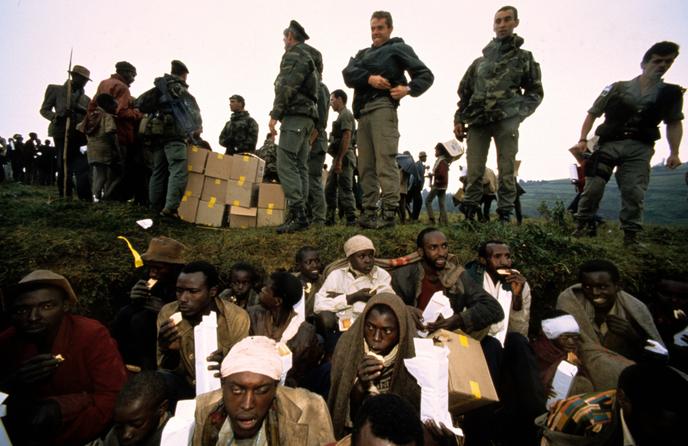
Le livre s’intitule Rwanda, la fin du silence, témoignage d’un officier français (éditions Les Belles Lettres, sortie vendredi 16 mars). L’officier en question, c’est Guillaume Ancel, 52 ans, dont vingt passés dans l’armée. Comme d’autres, il a participé, en juin 1994, à l’opération « Turquoise » lancée par la France dans ce pays d’Afrique, théâtre du dernier génocide du XXe siècle (800 000 morts en trois mois, en majorité tutsi
), orchestré par le gouvernement en place, à dominante hutu. Le récit que l’ex-capitaine tire de cette expérience contredit la version officielle d’une opération avant tout humanitaire. Pour lui, les autorités politiques et militaires de l’époque, sous la présidence de François Mitterrand, ont surtout cherché, du moins dans un premier temps, à sauver un régime « ami » emporté par la folie meurtrière.
Un événement particulier a incité Guillaume Ancel à témoigner. Il remonte au 27 février 2014. Ce jour-là, la Fondation Jean-Jaurès, le think tank du Parti socialiste, organise à Paris un colloque à huis clos sur la politique africaine de François Mitterrand. Une quarantaine de personnes – juristes, historiens, diplomates… – y participent, sous la présidence de Paul Quilès, ancien ministre de la défense. Les intervenants se succèdent, tous si proches du PS que les contributions sont unanimes dans la louange.Article réservé à nos abonnés Lire aussi « Rwanda, la fin du silence » : un ancien officier français raconte
Vient alors le tour de M. Ancel de raconter sa guerre, lui qui était alors « officier de guidage de tir aérien », chargé de diriger au sol les missiles largués par l’aviation. Ce qu’il raconte va à l’encontre des propos des autres intervenants. D’après lui, « Turquoise » fut bien une opération de guerre avant de se muer en intervention humanitaire. « A ce moment-là, quarante mâchoires se décrochent », se souvient-il. La tension monte, l’atmosphère devient électrique. Paul Quilès intervient. « Sorti de son contexte, jeune homme, votre témoignage pourrait faire gravement douter les Français, dit-il en pointant un doigt rageur. Je vous demande, par conséquent, de ne pas raconter de telles choses, pour ne pas troubler la vision qu’ont les Français du rôle que nous avons joué au Rwanda. »
Le « jeune homme » de 49 ans est stupéfait. Sa réponse fuse : « Le problème, il n’est pas dans mon témoignage, il est dans votre version officielle, qui est bien plus romancée que la mienne. » Rouge de colère, Paul Quilès finit par quitter la salle. Deux jours plus tard, M. Ancel entend les mêmes reproches menaçants, relayés par une de ses relations professionnelles : son histoire pourrait faire « gravement douter les Français ». « Ces menaces ont déclenché ma volonté de témoigner », affirme-t-il aujourd’hui.

MAGAZINE THERMALQuelles sont les conditions pour un remboursement de sa cure thermale ?CAPTURE, INSPIRE, ENGAGEDeliver better marketing results with Ligatus. Premium native advertising at its absolute best.CAPTURE, INSPIRE, ENGAGEDeliver better marketing results with Ligatus. Premium native advertising at its absolute best.CAPTURE, INSPIRE, ENGAGEDeliver better marketing results with Ligatus. Premium native advertising at its absolute best.CAPTURE, INSPIRE, ENGAGEDeliver better marketing results with Ligatus. Premium native advertising at its absolute best.
THE FRANCO-RWANDAN BONE OF CONTENTION
THE FRANCO-RWANDAN BONE OF CONTENTION
AND ITS IMPACT ON THE BILATERAL RELATIONS BETWEEN RWANDA AND FRANCE, AND ON THE GREAT LAKES REGION OF AFRICA
Note by the author :
Ntarugera Deo Koya, political and diplomatic Consultant:
The text beneath was produced close to fifteen years ago as part of the multitude of texts I wrote with the intention of publishing them in book form later on. That book never saw the light of day. However, Rwanda government top officials did present some of my texts to their international fellow leaders of the global world in international forums. Then Prime Minister Bernard Makuza and Foreign affairs Minister Charles Murigande used to take turns to profusely express appreciation for my political and diplomatic literature of the genocide aftermath. I did publish some of said texts on the website of a Canadian friend of Rwanda: the ever obliging Jackie Jura who had taken such a great fancy to the mesmerizing person of Paul Kagame. Lots of Rwanda government departments had no website then, and the Office of the President of the Republic that had just acquired a website, was at a loss as to what to air on the web. End of note
http://www.orwelltoday.com/rwandafrancecontention.shtml
This document presents the origin of the Franco-Rwandan bone of contention, which is the role of France in the 1994 genocide of Tutsis in Rwanda coupled with France’s refusal to acknowledge it and apologize for it. The document also exposes the negative attitude of the French Government towards the post-genocide Government of Rwanda, and the Judge Bruguière’s affair which is the latest front opened by France in the relentless war she has been waging against the Government of Rwanda in the course of the last 12 years.
The document further reviews the actions which were undertaken by the Government of Rwanda in order to normalize its relations with France, all to no avail unfortunately.
1. A historical background to the Franco-Rwandese bone of contention
Although Rwanda was not a French colony, Rwanda as a French-speaking country has enjoyed a privileged relationship with France. Rwanda was indeed a founding member of such France-led groupings as the “Francophonie” and the “France-Africa Summit”.
The relationship between France and Rwanda later on became even more special, and Rwanda really entered in what France calls the “pré-carré” (her reserved corner or backyard in Africa) in 1975, with the signing of a military assistance agreement between President Juvénal HABYARIMANA and President Valéry Giscard d’Estaing.
In 1983, the relations between France and Rwanda entered a new phase with the appointment of Jean Christophe Mitterrand, son of late President François Mitterrand, to head the African Cell in the Elysée (the Office of the President of the French Republic), which is in fact the most powerful institution as far as the French African policy is concerned. Jean Christophe Mitterrand quickly developed close friendship with Jean Pierre Habyarimana, one of the sons of the late President of Rwanda.
Unlike other colonial powers, France never indeed allowed full independence to its former colonies. Late Sékou Touré’s Guinea paid a heavy price for asserting her right to full independence from France in 1958. France maintained a strong military presence in almost all her former colonies, engineering most “coups d’état” either directly through her military bases, or the national armies she was training, or else via sponsored mercenaries like Bob Denard.
In her African foreign policy, France could never imagine, let alone accept a change of power in her backyard (“pré-carré”) without her active involvement, or at the very least her blessing. Interventionism in the France’s backyard or “pré-carré” in Africa has been part and parcel of the French African foreign policy. It is worth recalling here that in France, foreign affairs and defense matters are the undisputed constitutional preserve of the President of the Republic.
When in 1990 the Rwandese Patriotic Front (RPF) launched its armed struggle against the regime of late Habyarimana in Rwanda to address all its evils, France reckoned that the RPF had committed several “lese-majesty” crimes:
· By launching its armed struggle from an English speaking country, i.e. Uganda, RPF re-ignited the Fashoda syndrome for France. France responded by launching a propaganda war that presented the RPF struggle as a plot by the Anglo-Saxon world, whose objective was to reduce France’s influence in Africa.
· How could the RPF dare attempt a change of power in France’s “pré-carré” without France’s involvement or blessing;
It was therefore not surprising that France, arguing the defense of the Francophone world, and refusing to admit a change of power in her backyard (“pré-carré”) which was not authorized by her, came to the rescue of late Habyarimana’s regime through a military intervention in Rwanda code-named “NOROIT”.
In this military intervention, France brought along Belgium and Zaïre with her by misleading them into believing that Rwanda had been attacked by Uganda. However, Belgium and Zaïre quickly withdrew their troops when they realized that:
· The conflict was a civil one and had its root in the bad governance which had relegated hundreds of thousands of Rwandans into exile for decades, and transformed millions inside Rwanda into second class citizens;
· It was not at all an international conflict between Rwanda and Uganda.
From 1990 to 1994, the military situation in Rwanda became a personal affair of President Mitterrand who appointed General Jean Pierre Huchon to closely follow the matter, and report directly to him.
France maintained her troops in Rwanda, which actively fought alongside the Rwandan Armed Forces (FAR) against the Rwandan Patriotic Army (RPA), the armed wing of the RPF. The French troops were especially in command responsibilities, and they manned heavy artillery and helicopters gunship. France’s involvement in the Rwandan civil strife was not a secret as evidenced by the appointment, in 1992, by late President Habyarimana, of French Lieutenant-Colonel Chollet as the overall planner and commander of all military operations of the Rwandan Armed Forces (FAR). Apart from this military engagement on frontlines, French soldiers manned roadblocks at which Rwandans carrying identity cards marked “Tutsis” were either arrested and made to disappear, or else simply killed on the spot.
During the whole period from 1990 to 1994, French troops participated in the training not only of the regular armed forces of Rwanda, but also the Interahamwe militia, which later spearheaded the execution of genocide of Tutsis and the massacre of dissident Hutus. This training was not only military but also political and ideological. During all this period the Armed Forces of Rwanda (FAR) and the Interahamwe militia which were trained and equipped by France committed numerous genocidal massacres against Tutsis in different parts of Rwanda, such as in Mutara (1990), in Ruhengeri-Gisenyi (the massacres of Bagogwe-Tutsis in 1991, 1992,1993), in Bugesera (1992), without any reaction from France.
In January 1993, an International commission comprising several Human rights organizations including FIDH (“Fédération International des Droits de l’Homme”), Human Rights Watch, etc., documented these massacres against Tutsis and qualified them as acts of genocide, but France maintained the same policy of support to a Government that was committing genocide against its people. In June 1993, Mr. Adama DIENG, then UN Special Rapporteur on torture and extra-judicial killings visited Rwanda, and wrote a report in which he alarmingly drew the attention of the world on the preparations of genocide against Tutsis. The alarm went unheeded. Neither this UN Rapporteur nor the Human rights organizations were listened to, because the accomplice voice of France was much louder and quite efficient in covering up the crimes of the Rwandan regime. The international community missed an opportunity to prevent genocide because of the complicity of France.
France encouraged the creation of an extremist party called ‘’CDR’’ (“Coalition for the Defense of the Republic”),which later on spearheaded the execution of genocide, as evidenced by the exchange of letters between President Mitterrand and the CDR leadership. The picture of President Mitterrand was frequently displayed on CDR’s heinous publication, the infamous “KANGURA”, portraying him as the friend of their “Hutu cause”. Although this extremist party openly advocated the extermination of Tutsis, it received the backing, the attention and advice from French diplomats in Kigali. Moreover CDR leaders such as Jean Bosco BARAYAGWIZA were officially hosted in Paris, even when the execution of genocide was in full swing.
The former French Minister of Cooperation Marcel Debarge did not hesitate to openly encourage all Hutus to unite against Tutsis and the RPF. It is this encouragement that led to the creation of the so-called Hutu-power, a political coalition that was at the forefront of the perpetration of genocide.
In accordance with the Arusha Peace Agreement signed between the Government of Rwanda and the RPF, the NOROIT operation ended at the end of December 1993, but France officially maintained 40 military instructors (unofficially they were actually more than 40). It is worth noting that during the lengthy negotiations between RPF and the Government of Rwanda, France maliciously supported the intransigence of the genocidal government of Rwanda, as they were both trying to simply obtain the capitulation of RPF through these negotiations, and nothing else. The appearance of seeking peace in Arusha, and elsewhere, was for both of them a mere hoax luring the attention of the international community, which knew little or nothing about their real agenda.
Unsurprisingly therefore, late President Habyarimana grew unhappy with the outcome of the negotiations, and at the peak of his dissatisfaction, he referred to the Arusha Peace Agreement as just another nondescript mere heap of sheets of paper which shall never have a chance of implementation! He was at the time addressing Rwandan citizenry in the northern part of the country, where he was born; he spoke in the national language, Kinyarwanda, and he was obviously arousing the basest instincts of his countrymen and women, bracing them for the “final hour” of those long meant to be doomed, for the final round, still looming ahead then, of the topmost genocide of the Tutsi. That final round, which was most certainly and documentedly in the offing, did eventually come about as no surprise in April – July 1994.
Despite the committed regional leadership’s peace-seeking efforts, the genocidal government of Rwanda stalled the implementation of the Arusha Peace Agreement, while it pursued a policy of ethnic cleansing , mass murders of Tutsi folks, and political assassination of Hutu opponents.
On April 6, 1994 the plane carrying late President Habyarimana from Dar Es Salaam, where he had just attended a Regional Summit that sought to convince him to allow the long overdue implementation of the Arusha Peace Agreement, was shot down as it was landing at the Kigali Airport. Planners of the Tutsi genocide quickly seized this moment to theatrically exploit the nightly plane crash, to enter the full gear as it were, the final full swing of the final round of the Tutsi genocide.
It is worth mentioning here that the Kigali international airport lies about 3 kilometers away from the official residence of late President Habyarimana, and the area was heavily guarded by the Presidential guard assisted by French troops. These forces prevented the UNAMIR (United Nations Assistance Mission to Rwanda) from getting to the crash site, to carry out an investigation.
What these combined forces, the FAR and the French soldiers, were hiding from this UN Mission has so far remained a pregnant mystery of sorts!
Following death of Habyarimana’s plane, France sent troops to Rwanda code-named ‘’Amaryllis’’, officially purported to evacuate their nationals, including the HABYARIMANA family and their relatives, leaving behind them extremist Hutus to perpetrate a genocide that had been planned long before. These French troops did not care in the least for the Tutsis operatives that worked for the Kigali French Embassy and the French Cultural Centre, while they did very lovingly care for the evacuation of the dogs and cats belonging to French expatriates!! Those French Embassy and Cultural Centre Tutsi staffers were unappealingly left behind to meet their certain doom at the Kigali airport. Understandably, this must certainly weigh pretty heavy on the conscience of quite a number of the French government officials, civilian and military, who were involved in deciding and executing the early and final rounds of the Tutsi genocide.
Under the cover of this operation France delivered huge quantities of arms to EX-FAR and Interahamwe as attested by some MINUAR and FAR officers. France continued to deliver weapons to these forces that were committing genocide throughout the execution of the celebrated horrendous tragedy, and later on via the D.R.Congo, then Zaïre.
When France realized eventually that despite her supplies of weapons, the genocidal forces were unable to stop the RPF forces but were rather loosing the war, she decided to send her troops through yet another military operation code-named “Turquoise”, to the rescue the genocidal government and military, and save them from total defeat and discomfiture. Using her prominent position in the UN Security Council, France was able to hoodwink 10 out of the 15 members of the UN Security Council into believing that she was sending a bona fide “Humanitarian mission”, a dangerous hoax in actuality as it later turned out. The hoodwinked United Nations Security Council members therefore candidly voted for UNSC Resolution nº 929 authorizing French troops to be deployed in Rwanda under the code name of ‘Operation Turquoise’’.
The fact that a so-called humanitarian operation was only for by 10 out the 15 members of the UN Security Council proves that most members of the UN Security Council questioned the Humanitarian character of the French mission, and had good cause to suspect that France was intervening, to indeed rescue their friendly genocidal government and military forces that were showing unmistakable signs of exhaustion and distress bordering on defeat.
The deployment of the French troops did not succeed to boost the combat morale of the genocidal forces, which were eventually defeated by RPF forces in July 1994. The French troops of the “Operation Turquoise’’ finally resolved to organize the evacuation of the defeated genocidal forces into Zaire were they attempted to re-organize, re-train and re-arm them with the hope that they could re-capture power in Rwanda.
It is quite worth noting at this juncture that the French troops of the so-called Turquoise forced the Rwandan populations to massively flee into Zaïre, in order to lend credence to the French government’s anti-RPF propaganda vociferously claiming that the RPF lacked popular support and legitimacy, since “the people had so to speak voted with their feet by following the authors of genocide, their would-be true leaders, into exile”!
Given France’s military, political, diplomatic and financial involvement on the side of the forces which committed genocide in Rwanda, the defeat of these forces was excruciatingly felt by the French government as France’s own defeat in the heartland of African. Defeating France constituted a third “lese-majesty crime” or a sacrilege committed by RPF.
2. The French Government’s attitude vis-à-vis the Government of National Unity installed after the 1994 genocide.
The defeat of the genocidal forces that France had supported militarily, politically, diplomatically and financially was perceived by France as a bitter pill to swallow, especially as she tried to figure out how this defeat would be perceived in France’s African backyard, in their cherished so called “pré-carré”. It was therefore not surprising that France attempted by all means to re-instate the genocidal regime into power, so as to reverse the defeat and thus reassure other friendly regimes in her African backyard. Since 1994, France adopted an anti-Rwanda government attitude, with the evident objective of weakening it, and eventually creating conditions for its envisaged overthrow. This can be illustrated by the following few examples:
· French authorities refused to acknowledge the 1994 genocide against the Tutsis. When this capital crime was clearly acknowledged by the international community through the creation of an International Criminal Tribunal for Rwanda to punish it, France developed the ‘’thesis of a double genocide’’ and used all means to substantiate it. Through this maneuvering, France was pursuing two objectives: The first objective is to show that there are no good nor bad guys in Rwanda, they are all the same, thus appearing to justify that she had to side with the genocidal regime, which was at least friendly to France. The second objective was that of criminalizing the government of Rwanda with the hope of transforming it into a pariah government. To this end French intelligence services have sponsored books by Péan, Onana, Ruzibiza, Debre, etc., which are now being used by Judge Bruguière, as main sources of information for their so-called investigation.
· France dragged her feet in recognizing the government of National Unity put in place in July 1994. France only appointed her Ambassador to Rwanda in March 1995, because she all along hoped that the newly installed Government would collapse within 6 months.
· This non-recognition of post genocide Rwandan Government was evidenced by the fact the Government of France refused to invite Rwanda to the France-Africa Summit of Biarritz in November 1994, even though Rwanda is a founder member of the France-Africa Summit.
· The French authorities have given asylum and protection to major planners of genocide including close relatives of HABYARIMANA like Madame Agathe Habyarimana, and many personalities of the Hutu Power, who freely carry out their political activities aimed at destabilizing Rwanda. France has turned into a safe haven for the 1994 genocide suspects, where they are shielded against judicial prosecution.
· Since her re-opening, the Embassy of France in Rwanda has been solely devoted to the mobilization of internal opposition. She even went to the extent of encouraging government officials to flee the country, so as to weaken the Rwandan government of National Unity.
· French government has consistently opposed Rwanda’s development programs presented to international organizations such as World Bank, the IMF and the European Union, even though she has never used her veto against Rwanda within EU. France became a champion of imposing non realistic conditions for foreign aid to the Government of Rwanda.
· Although France was the biggest bilateral donor to the Government of Rwanda before 1994, she became the least of donors after the genocide.
· At the 2 Geneva Round Tables of Donors (1995, 1996) organized for the mobilization of funds for the recovery and rehabilitation of Rwanda, France did not contribute a penny, even though Rwanda was emergig from the worst tragedy ever in her history. Indeed, true friends reveal themselves in times of need!
· At the United Nations, France strongly argued to limit the competence of the United Nations Tribunal for Rwanda to the period between 1st of January 1994 and 31st of December 1994 so as to exclude the period between 1990 -1993 which would have allowed the ICTR to lay bare France’s notorious role in the preparation of genocide. This was not fortuitous!
· There exist a tacit and unwritten rule at the UN Security Council which gives to France the sole responsibility of drafting UNSC resolutions and Presidential statements concerning the region of Rwanda, Burundi and the Democratic Republic of Congo. France has exploited this prerogative to make sure that all these UNSC resolutions and Presidential statements contain baseless accusations against, and condemnations of, Rwanda. Indeed, UN Security Council Draft resolutions and Presidential statements presented by France have more often than not baselessly accused Rwanda of committing human rights violations in DRC, looting DRC resources, violating UN arms embargo in DRC, and fueling conflict in that country, etc.
· France has used her privileged position in the UN Security Council to prevent the use of forceful means to disarm and demobilize the forces which committed genocide in Rwanda, while at the same time pleading with the UN Security Council to impose an arms embargo against Rwanda. The objective pursued by France is therefore glaring: to weaken the Rwandan government so as to facilitate its overthrow by these genocidal forces.
3. Judge Bruguière’s affair and his international arrest warrants
Judge Bruguiere’s affair and his international arrest warrants is a continuation of this overt and covert war that France has been waging against the Government of Rwanda for the last 12 years. The argument of independence of justice behind which the government of France is hiding can hardly resist the analysis of the case. A quick look at what the Judge and the Paris Prosecutor’s office have done reveals clearly that the issuance of these international arrest warrants is not only politically motivated, but also a political attack against the Rwandan government, all wrapped up in a judicial cloth:
· Indeed in France as elsewhere, it is a sacred principle that a judicial investigator would have to consider all evidence against and in favor of the suspect. However this French Judge has only based his investigation and built his case on the basis of testimonies from witnesses who are known either to have played a role in the 1994 genocide in Rwanda (French military, intelligence and political officers who were in involved in Rwanda before, during and after the 1994 genocide and sided with the genocidal forces, suspects of genocide incarcerated in ICTR prison in Arusha or still at large, etc.), or else those known to be political opponents of the government of Rwanda. Who is this so-called “independent” judge who would only seek testimonies from enemies of those he wants to incriminate!
· This judge never came to Rwanda to visit the scene of the crime he claims to have investigated, to interview people leaving in the vicinity of the scene of the crime and may have witnessed the crime, or at least to appreciate if it was materially possible for his suspects to be at the scene of the crime, given the prevailing conditions at the time of the commission of the crime. No rogatory commission sent from France in the framework of this investigation.
· There are no eye witnesses of the crime among the witnesses cited by Justice Bruguière. They are “hearsay” witnesses! What’s the value of “hearsays” in criminal law? Furthermore, some of the witnesses cited by the judge have denounced him as being just a manipulator and a liar.
· Judge Bruguière never tried to interview the people he accuses.
· Judge Bruguière violated the secret of investigation by allowing Mr. Stephen Smith, a journalist of Le Monde, to publish his so-called “findings” during the investigation. Knowing the close relations of these two gentlemen with the French intelligence servicse, it is easy to see that Bruguiere’s so called investigation is indeed not a judicial investigation, but rather a political maneuvering endeavor to destabilize the Rwandan government.
· The material evidence used by the judge, notably the 2 pictures of supposed missiles launchers used to shoot down Habyarimana’s plane that were snapped by an officer of the genocidal army, had been rejected by the French Parliament mission of information as a manipulation attempt by the genocidal Rwandan army and the French intelligence services. Indeed an analysis of the pictures shows that the missiles had not been fired, which meant that these missiles were in the hand of the genocidal army before they were fired, if they ever were. This excludes the hypothesis of RPF using the pictured missiles to commit the crime it is accused of.
If the Paris prosecutor’s office were really independent, it could never have authorized Judge Bruguière to issue international arrest warrants on the basis of such a hollow and vitiated case.
Of course what mattered to Judge Bruguière and the Paris prosecutor’s office, alongside and those who gave orders, was rather to destroy the image of Rwandan leaders and not the judicial end of these international arrest warrants. Whether the accused are one day brought to justice or not is immaterial for them, in any case the harm they sought to cause is already done, as far as they are concerned!
4. Efforts of the Government of Rwanda to normalize relations with France.
Despite France’s role in the planning and execution of genocide, as substantiated above, and her consistent negative attitude towards the government of Rwanda, the RPF and the Government of Rwanda did all they could to normalize relations with France, but to no avail. The following are some of the actions attempted:
· Following the military intervention of France, Belgium and Zaire in Rwanda on the side of Habyarimana, RPF approached the governments of these countries and explained to them the root causes of its armed struggle. Belgium and Zaire did understand and withdrew their troops, but France maintained hers in Rwanda.
· RPF continued its attempts to explain to French authorities the motivation of its struggle. RPF’s efforts to approach the French authorities went to the extent of sending H.E Paul KAGAME to Paris in 1992, on the invitation of French authorities. Despite having officially invited him, they put him in detention for a whole day!
· Despite knowing France’s involvement in the planning and execution of genocide, and her continued support to genocidal forces, the Government of National Unity decided to invest her efforts in mending relations with France. A kind of extension of the internal reconciliation policy at the international level, as it were.
· France was the first country to receive an Ambassador of the Government of National Unity after the 1994 genocide. Unfortunately France managed to convince this Ambassador to quit the government of Rwanda.
· Despite the fact that in 1994 France had declined to invite Rwanda to the Franco-African Summit in Biarritz, Rwanda did attend the France-Africa Summit organized in Paris in 1998, with a delegation headed by the President of the Republic of Rwanda; and in February 2003, H.E Paul KAGAME attended personally the France-Africa Summit of Heads of State and government organized in Paris.
· Leaders of Rwanda requested friends of France on the African continent and elsewhere to help the two countries to mend the relations. In July 2004, the Ministers of Foreign Affairs of the two countries met in South Africa under the mediation of the South African Minister of Foreign Affairs.
All these contacts at the highest level (Heads of State, Prime Minister’s, Ministers) didn’t succeed in achieving any significant changes in the relations between Rwanda and France. France maintained its negative attitude against Rwanda. Rwandan authorities have done whatever they believed could contribute to the normalization of relations between the two countries, but nothing ever seemed to change on the part of France.
The Bruguière’s affair is only the latest front line opened by the French Government in its long war against the Government of Rwanda. After failing to re-organize the defeated genocidal forces (EX-FAR and Interahamwe) into a politico-military force capable of overthrowing the Government of Rwanda; noting that despite France’s opposition in international finance institutions, Rwanda continues to enjoy the support deservedly earned by her good governance and development policies, France has decided to try a judicial fight, and has to that effect concocted allegations against the Rwandan leadership and abusively used the legal system to try to discredit the Rwandan government.
The Government of Rwanda has analyzed these turbulent relations and came to the conclusion that it serves no useful purpose to maintain diplomatic relations with the Government of France, considering that it continues to relentlessly pursue the objective of destroying it, and Rwanda as a whole. The Government of Rwanda has therefore decided to order the closing of the Embassy of France in Rwanda, as well as other French official government entities in Rwanda, which could still be used to further destabilize Rwanda. The Government of Rwanda has correspondingly closed its Paris Embassy. French nationals residing in Rwanda do however have all the guaranties that their stay in Rwanda willl never be disturbed, unless they get mixed up in the politics of their country’s government antagonizing Rwanda.
However the Government of Rwanda shall happily resume normal and diplomatic relations, when France will have put an end to her belligerent attitude against Rwanda.
We think that it is better to have this problem clearly exposed to the world, so as to allow all and sundry, across the global human community, to help find a solution to it. We believe that this will require addressing, frankly and openly, the issue of France’s involvement in the 1994 genocide, which continues to pollute relations between the two countries. This continues to haunt the conscience of those in France’s leadership who played a role in it. They have tried to silence this conscience by waging a merciless war on the government of Rwanda, with the hope that this government will some day disappear from the face of the Earth, and, along with it, the accusations whose painful exhibits keep on crushing consciences of several persons among the French government leadership!

